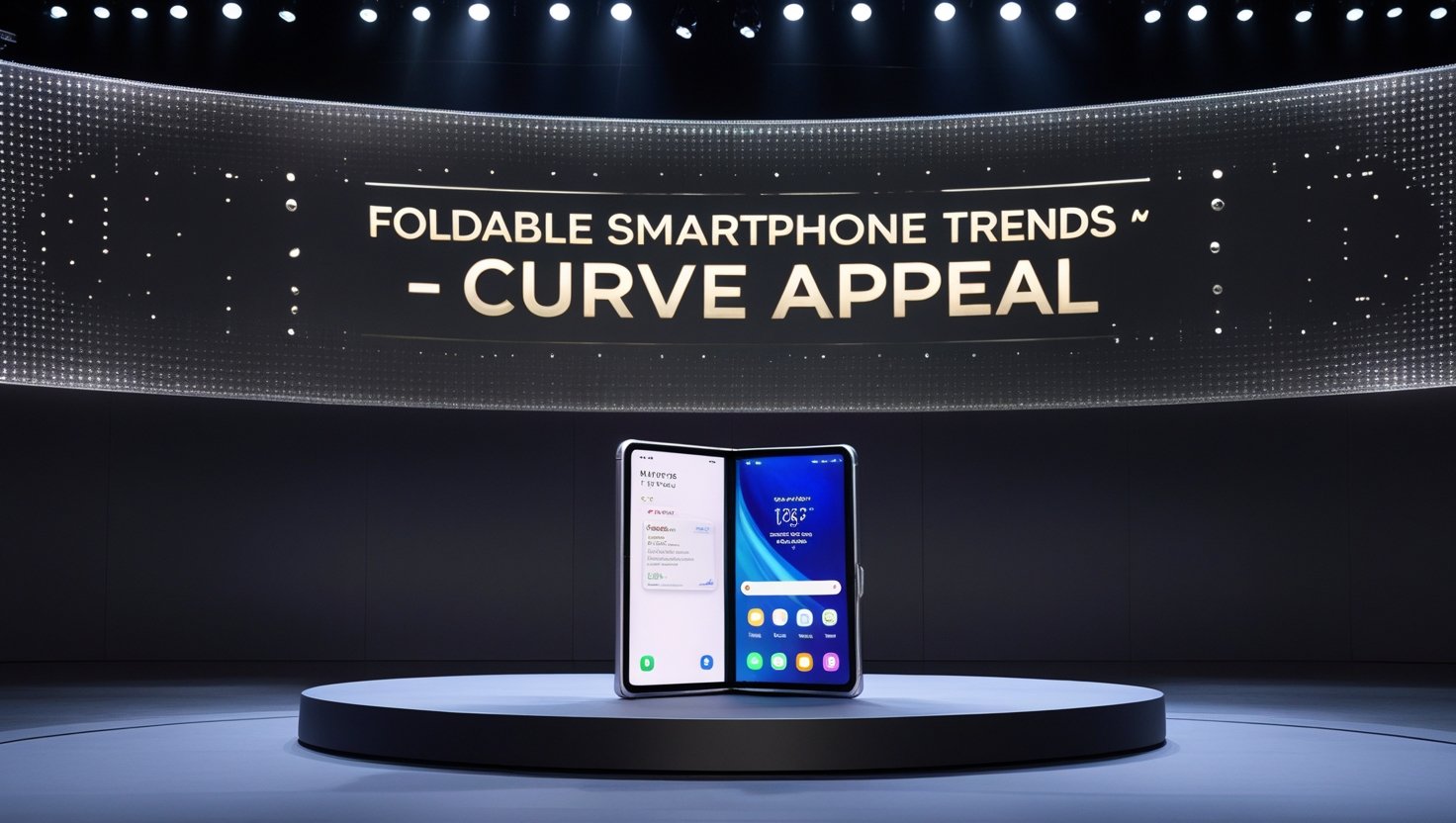
Remember when flip phones were the epitome of cool? Fast forward to today, and a new wave of innovation is bending the very shape of our smartphones. Foldable smartphones are no longer a futuristic fantasy; they’re a tangible trend reshaping how we interact with technology. This article dives into the captivating world of foldable smartphone trends, exploring their current appeal and hinting at the exciting curves ahead.
The Bendable Breakthrough: Why the Hype?
The initial allure of foldable smartphones was undoubtedly the novelty, a device that could transform from a pocketable form factor into a mini-tablet. But the hype extends beyond mere gimmickry. These devices address a fundamental user desire: more screen real estate without sacrificing portability. Imagine reading a document, browsing the web, or multitasking on a spacious display that conveniently folds to slip into your pocket. This inherent versatility is a game-changer, offering a unique blend of productivity and convenience that traditional smartphones simply can’t match. The “wow” factor is real, but it’s the enhanced functionality that’s driving the growing interest.
Current Curves: What’s Shaping the Market Now?
The current foldable smartphone market is characterized by distinct form factors and evolving technologies. We see the “book-style” fold, exemplified by the Samsung Galaxy Z Fold series, which opens horizontally to reveal a larger inner display. This design caters to users who prioritize tablet-like multitasking and immersive viewing experiences. On the other hand, the “clamshell” fold, popularized by the Samsung Galaxy Z Flip series and the Motorola Razr, offers a more compact and pocketable design when folded, appealing to those who value portability and a nostalgic flip phone feel with modern smartphone capabilities.
Beyond the form factor, display technology is a crucial aspect of current trends. Manufacturers are constantly refining the durability and crease visibility of the flexible OLED screens. Advancements in hinge mechanisms are also critical, aiming for smoother folding actions and increased longevity. Software optimization is another key area, with developers working to create seamless transitions between the folded and unfolded states and to leverage the unique dual-screen capabilities for enhanced multitasking and app experiences. The price point remains a significant factor, and while still premium, we are seeing a gradual trend towards more accessible options as the technology matures and production scales up.
The Horizon’s Arc: What Future Folds Might Hold?
Looking ahead, the trends in foldable smartphones point towards even more innovative designs and functionalities. We might see devices with multiple folds, allowing for even greater screen real estate or more versatile form factors that can adapt to various use cases. Imagine a phone that unfolds into a full-sized tablet or even a device that can be worn like a large smartwatch.
Material science will play a crucial role, with advancements in flexible glass and polymers leading to more durable and less creased displays. Hinge technology will likely evolve further, perhaps becoming invisible or offering new functionalities. Software integration will become even more seamless, with apps and operating systems designed from the ground up to take full advantage of foldable displays and multi-tasking capabilities. We can also anticipate a broader range of foldable devices beyond smartphones, such as laptops and tablets, blurring the lines between traditional device categories. As the technology matures and costs decrease, foldable devices have the potential to become mainstream, fundamentally changing how we interact with our personal technology. The curve of innovation in this space is steep, promising a future where flexibility is not just a feature but a fundamental aspect of our digital lives.
Conclusion:
Foldable smartphones represent more than just a technological novelty; they signify a fundamental shift towards more adaptable and versatile mobile devices. While still in their early stages of mass adoption, the current trends indicate a growing consumer interest in the unique blend of portability and expanded screen real estate they offer. As technology continues to advance, we can expect even more innovative designs, improved durability, and more accessible price points, solidifying the place of foldable smartphones in the future of mobile technology. The “curve appeal” is undeniable, and the journey of unfolding possibilities has only just begun.
FAQs:
Q1: What is a foldable smartphone?
A foldable smartphone is a device with a flexible screen that can bend or fold, allowing it to transform into a larger display or a more compact form.
Q2: Why are foldable smartphones becoming popular?
They offer a larger screen for better viewing and multitasking while remaining relatively portable when folded.
Q3: What are the main types of foldable phone designs?
The main types are “book-style” (folds horizontally to a larger screen) and “clamshell” (folds vertically for compact portability).
Q4: Are foldable phone screens durable?
Durability is improving with advancements in flexible glass and hinge mechanisms, but they generally require more careful handling than traditional smartphones.
Q5: Are foldable phones expensive?
Currently, foldable phones are generally premium devices, but prices are expected to become more accessible as the technology matures.
Q6: What might future foldable phones look like?
Future designs could include multiple folds, rollable displays, and integration into other device categories like laptops and tablets.