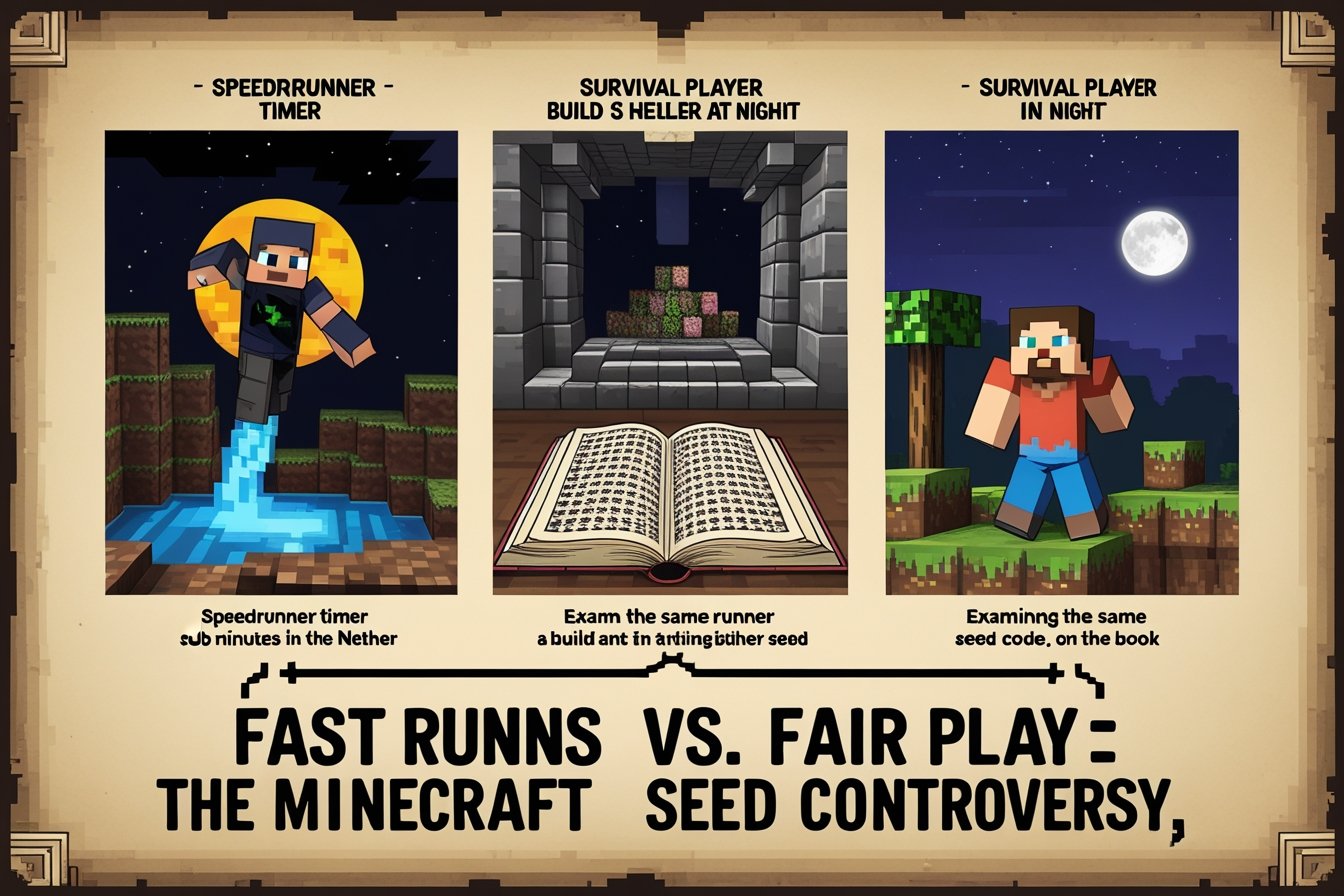
“Imagine spawning next to diamonds”, that tantalizing promise fuels both excitement and debate. In the world of Minecraft, the choice between fast runs and fair play has sparked a heated controversy. On one side, speedrunners chase world records, seeking out ideal Minecraft seeds to shave off seconds. On the other hand, purists argue that the true challenge lies in embracing randomness. This clash over game integrity and seed manipulation is reshaping how players and even developers define competitive crafting.
The Power Behind a Minecraft Seed:
Every new Minecraft world begins with a 32-bit number called a seed. This seed dictates terrain, biomes, cave systems, and, crucially, where valuable resources like diamonds spawn. A coveted seed can mean the difference between a leisurely playthrough and a record‐breaking speedrun. Because seeds can be shared, speedrunners often hunt for “perfect” seeds that minimize travel time between spawn and endgame goals. But when every player uses the same starting point, some wonder: Is this still the essence of fair play, or simply a shortcut to glory?
Digging into Fast Runs:
Speedrunning in Minecraft is both a science and an art. Runners meticulously analyze world generation quirks, crafting optimal routes through the Overworld, Nether, and End. Tools like seed viewers let them preview every twist in their digital playground. In theory, this is a brilliant display of strategy, leveraging every in-game mechanic. In practice, it raises eyebrows: when you already know the map, how much skill remains? Critics say that too much pre-planning erodes the spontaneity that makes Minecraft charming.
The Fair Play Compromise:
For many players, the true thrill comes from uncharted terrain. Fair play advocates insist on using random seeds, ensuring each run is a fresh puzzle. They argue this levels the field, rewarding adaptability over foreknowledge. Random seeds maintain suspense: you might spawn in a desert temple or an icy tundra, and your tactics must shift on the fly. That unpredictability, they claim, is the heart of Minecraft’s survival mode and the cornerstone of genuine competition.
Seed Selection Schemes:
Tournaments and community events often establish their own seed rules. Some ban seed sharing altogether, opting for blind draws of unseen numbers. Others curate a pool of community-voted seeds, promising fairness and excitement. Then there are hybrid models: participants draw random seeds but get a short preview before official timing starts. Each approach balances two competing demands, ensuring a level playing field while preserving the strategic depth that top runners cherish.
When Speedruns Bend the Rules:
Controversy peaked when high-profile runners were caught using custom‐generated worlds masquerading as random seeds. Accusations flew: did these players deliberately “game” the system? For some fans, it was a betrayal, an abandonment of the DIY spirit that birthed early speedruns. Others defended the offenders, saying strict enforcement is impossible and that the community should focus on celebrating feats, not policing them. The incident prompted major speedrunning platforms to tighten verification protocols.
Debating Game Integrity:
“Is this cheating or innovation?” That question haunts every corner of the discussion. Proponents of unregulated seed use argue that Minecraft’s open‐ended design invites creativity, even if that means exploiting world-generation mechanics. Opponents counter that true competition demands transparent, consistent rules. At stake is more than bragging rights: it’s about preserving trust among competitors and viewers, and upholding game integrity as the community evolves.
Community Fallout and Opinions:
On forums and Discord channels, veterans and newcomers clash daily. Some veteran runners lament that modern speedruns feel like rehearsed theater, lacking genuine suspense. Newer players, meanwhile, enjoy the spectacle: watching a pro navigate a known map with precision is undeniably thrilling. Streamers monetize these runs; ad revenue and sponsorships hinge on big numbers. That financial incentive further muddies the waters, making seed controversies not just a hobbyist squabble but a business concern.
Mojang’s Stance and Policy Shifts:
Mojang has historically left competitive norms to the community, focusing on core updates instead. But as speedrunning’s popularity surged, the studio began acknowledging the scene. Official forums have hosted discussions on standardized seed protocols, and occasionally, in-game challenges spotlight random seeds. While Mojang hasn’t imposed hard rules, its nod toward greater transparency signals that the debate isn’t just fan-driven, it’s shaping Minecraft’s future direction.
Designing Fair Speedrun Rules:
Creating a universally accepted rulebook is no small task. A solid framework might include:
- Blind seed draws from verified RNG tools
- Mandatory screenshot or live-stream verification of the seed at start
- Clear definitions of “any%” versus “random seed” categories
- Independent oversight by community-trusted moderators. By codifying expectations and bolding them as non-negotiables, organizers can reduce disputes and foster healthy competition.
Can Fast Runs and Fair Play Coexist?
The tension between efficiency and authenticity isn’t unique to Minecraft. eSports, board games, and even marathons grapple with similar issues. Ultimately, compromise is possible: separate leaderboards for preset and random seeds could satisfy both camps. Hybrid events that mix speed segments with surprise challenges might become the norm. Whatever path emerges, one thing is clear: the Minecraft community’s passion ensures that both fast runs and fair play will continue to push the game into uncharted territory.
Conclusion:
The Minecraft seed controversy reveals a deeper truth: players value both the thrill of discovery and the pride of mastery. Striking a balance between fast runs and fair play demands clear rules, community buy-in, and a dash of creativity. As the scene matures, so too will its standards, ensuring that every journey through blocky biomes remains as exciting as it is honorable.
FAQs:
1. What is a Minecraft seed?
A unique 32-bit code that generates your world’s terrain and resource locations.
2. Why do speedrunners use specific seeds?
To optimize routes, reduce randomness, and break records more reliably.
3. Are predefined seeds considered unfair?
Many argue yes, because they remove the adaptability challenge inherent to random worlds.
4. How can I verify a seed’s legitimacy in a run?
Use live-stream captures or timestamped screenshots showing the seed before play.
5. Does Mojang enforce seed rules?
Not directly. Sparked by community feedback, they encourage transparent competition but leave enforcement to organizers.
6. Can I compete in both preset and random seed categories?
Absolutely—separate leaderboards exist for each, letting you showcase both precision and adaptability.